
Storm-Proofing Your Garage Door Before the Next Clay County System
Short answer: if your garage door isn't rated for wind load, has loose track hardware, or shows any rust or swelling at the panel seams, it's the most likely failure point on your house in a storm — and fixing that is cheaper and faster than most homeowners think. We're still inside the active part of hurricane season, and even after the calendar turns, Clay County keeps getting the wind-driven squalls and afternoon storm fronts that put real pressure on a garage door. Here's what actually matters and what to do about it.
Why the Garage Door Is Your Home's Weakest Wall
A standard exterior wall is a solid, continuous structure. A garage door is a large panel of thin steel or aluminum, hinged in sections, held in place by tracks, rollers, and a handful of brackets — and it's usually the biggest opening in the whole house. When wind hits a home, pressure builds on the windward side and drops on the leeward side. If the garage door buckles inward or blows out, that pressure suddenly has a direct path into the house. The result is often a damaged or lifted roof, because the attic and roof structure weren't built to handle a sudden pressure spike from the inside.
This is exactly why modern wind-load codes treat garage doors as a structural component, not just an appliance. Builders in hurricane-prone parts of Florida install doors rated for specific wind pressures, with reinforced tracks and bracing to match. Older doors, especially anything installed before wind-load requirements became standard, often don't meet that bar at all.
Warning Signs Your Door Won't Hold Up
Walk out to your garage and look for these before the next system is in the forecast, not during it:
- Rust at the bottom panel or hinges — common here thanks to humidity and, closer to the water, salt air. Rust weakens steel exactly where it needs strength most.
- Swollen or warped panels, usually from moisture getting into wood-composite doors or trapped behind weatherstripping that's failed.
- Loose or bent track brackets, which let the door shift or pop off the track under pressure instead of flexing and holding.
- Worn rollers or a sagging torsion spring, which puts uneven stress on the door every time it opens and closes, and will give out faster under wind load.
- No visible wind-load rating or reinforcement struts on the back of the panels. If you don't know whether your door is rated, assume it isn't until someone confirms it.
Steps to Take Before the Next Storm Rolls Through
- Check the wind rating. Look for a label on the inside of the door or check the installation paperwork. If there's nothing, that's worth confirming with a technician rather than guessing.
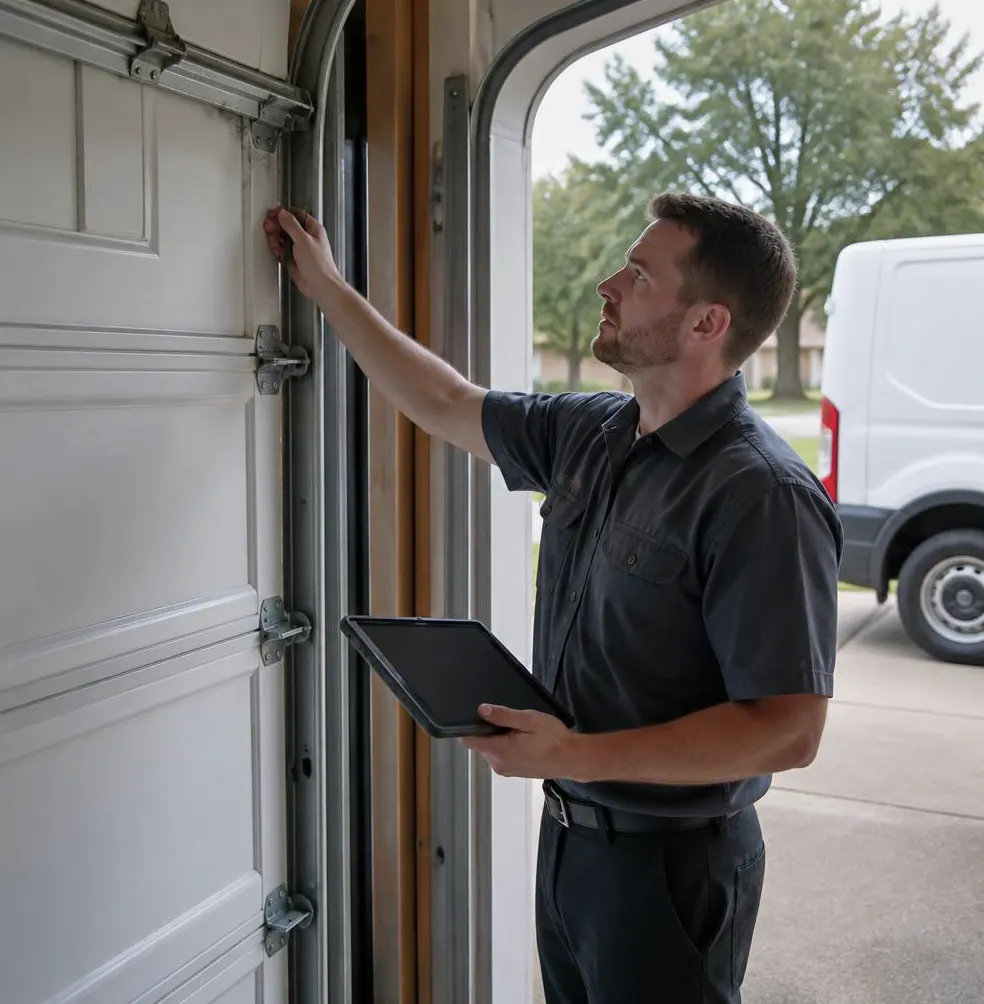
- Inspect and tighten hardware. Track brackets, roller brackets, and hinges all loosen over time from regular use and temperature swings. A quarter-turn on a lag bolt can be the difference between a track that holds and one that pulls loose.
- Lubricate moving parts. Humidity and salt air accelerate corrosion on rollers, hinges, and springs. A silicone-based lubricant (not WD-40, which attracts dust) keeps things moving smoothly and resists moisture better.
- Replace worn weatherstripping. Afternoon downpours push water hard against garage doors, and failed seals let moisture in that causes the swelling and rot mentioned above.
- Add reinforcement if needed. Horizontal or vertical strut kits brace panels against wind pressure. They're a reasonable middle step if full replacement isn't in the budget this season, generally running in the low hundreds of dollars installed as a national range.
- Confirm your opener has backup power. Storms knock out power, and a door stuck open or unable to close isn't a minor inconvenience — it's an open structural weak point for as long as the outage lasts.
- Clear nearby trees and debris paths. Branches and loose yard items become projectiles in high wind, and the garage door is often the biggest, most exposed target.
Reinforce or Replace?
Reinforcement kits help an otherwise sound door handle more pressure, but they don't fix rust, rot, worn track hardware, or a door that was never built to a wind-load standard in the first place. If your door is older, shows corrosion, or you're not confident in its rating, replacement with a wind-rated door is the more durable fix, even though it costs more upfront.
When to Call Green Cove Springs Garage Door
If you've spotted rust, a sagging panel, or hardware that's loose no matter how many times you tighten it, that's worth a professional look before storm season winds back up again. We handle Garage Door Tune-Up & Maintenance to catch small issues before they become storm failures, and Garage Door Installation & Replacement if your current door isn't built for the wind pressures this area sees. We'll check the rating, inspect the hardware, and tell you straight whether reinforcement or replacement is the right call for your situation.
Don't wait for the next system to find out your garage door is the weak point. Call Green Cove Springs Garage Door today and get it checked out before the wind picks up.