
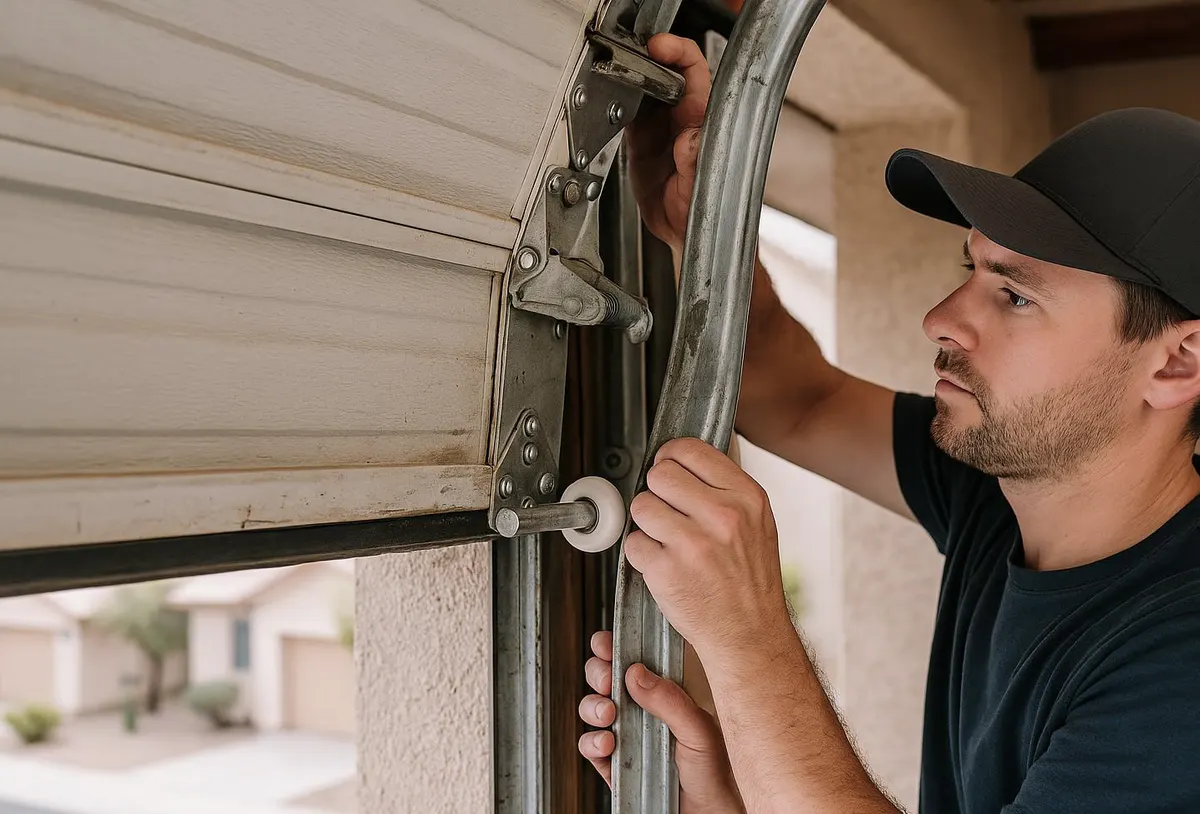
Skip garage door prep this year and the bill usually arrives on the coldest morning of the season, right when you're already running late. A spring that's been quietly weakening since July finally snaps while the door is halfway up. An opener motor that's been straining against a swollen, sticky panel burns out trying to force one more cycle. A track that shifted slightly during months of humidity swelling now binds hard enough to pop the door off its rollers. None of these show up out of nowhere — they build all summer and fall, then fail once temperatures drop and metal parts contract. A $150-$300 maintenance visit now is cheaper than an emergency spring or opener repair later, and a lot cheaper than a door that comes down wrong.
Why This Transition Is Harder on Garage Doors Here
Clay County doesn't get a hard winter, but it does get a real shift: humidity drops, nighttime temps can dip into the 30s and 40s during cold snaps, and the wood and steel in your garage door that spent months swelling in afternoon downpours now start contracting. That push-pull is what causes panels to bind, weatherstripping to pull away from frames, and hardware that was fine in August to suddenly feel stiff or misaligned in December. If you're near the coast, salt air has also been working on bare metal all season, and surface rust that was cosmetic in summer can seize a hinge or roller once things dry out and tighten up.
1. Check Every Metal Part for Rust
Walk the track, hinges, springs, and rollers with a flashlight. Surface rust on a spring is a warning sign, not just an eyesore — it eats into the coil and weakens the metal exactly where it's under the most tension. Rusted rollers or hinges can bind or crack when cold air stiffens the lubricant around them. Wire-brush light surface rust and get a straight answer on anything that looks pitted or flaking before it becomes a spring failure.
2. Re-Lubricate Everything That Moves
Months of humidity and storm dust gum up factory lubricant on rollers, hinges, and the opener's chain or screw drive. Clean off the old grime with a rag, then apply a silicone-based garage door lubricant (not WD-40, which attracts dust) to hinges, rollers, and the track. This single step prevents a lot of the grinding, stiff-opening problems that show up on the first genuinely cold morning.
3. Inspect Weatherstripping and the Bottom Seal
Summer swelling can leave panels sitting slightly differently than they did in spring, which stretches or gaps the weatherstripping. As humidity drops, the seal can shrink further and leave visible daylight at the bottom or sides. Check for cracked, flattened, or torn seal material, and look for storm debris lodged in the bottom track that's been holding the door slightly open. Fresh weatherstripping keeps out cold drafts, wind-driven rain from fronts passing through, and the occasional curious lizard or rodent looking for a warm garage.
4. Test Spring Balance Before You're Relying on It Daily
Disconnect the opener and lift the door halfway by hand. It should stay in place on its own. If it drops or shoots up, the springs have lost tension — common after a heavy season of use, including extra manual openings during storm-related power outages. A door with weak springs puts more load on the opener motor, which is how a spring problem turns into an opener replacement.
5. Check Track Alignment
Look down the length of each track from the bottom. Gaps, bends, or sections that don't run perfectly parallel usually trace back to humidity-driven shifting or a door that's been slightly forced due to binding. A door running on a misaligned track is more likely to come off the rollers entirely with one hard pull, especially when cold makes everything a little less forgiving.
6. Check the Opener's Backup Battery and Sensors
Cold fronts bring wind and rain even when hurricane season is officially over, and power blips are common. If your opener has battery backup, test it now rather than during the next outage. Wipe down the photo-eye sensors near the bottom of the track — storm season leaves a lot of dust and spider webs that cause random reversals or a door that won't close at all.
When to Call Green Cove Springs Garage Door
If the door won't hold its position when lifted by hand, if you see a stretched or rusted spring, or if the door is grinding, catching, or visibly off its track, stop operating it and call us. Those are the symptoms that turn into a dangerous drop or a stuck-open door overnight. We handle Garage Door Spring Repair and Off Track Door Repair for homeowners throughout Green Cove Springs, Orange Park, Fleming Island, Middleburg, and the surrounding area, and we also offer a full Garage Door Tune-Up & Maintenance visit that covers everything above in one trip — lubrication, hardware inspection, spring balance check, and sensor cleaning — so you're not guessing at what needs attention.
If your garage door has been fighting you all summer, don't wait for the first cold snap to find out why. Call Green Cove Springs Garage Door today and get it sorted before winter makes a small problem into an emergency.